When a hurricane or strong storm hits Florida, power outages can last for days. This can mean no A/C in the sweltering heat, spoiled food, and a home left unsafe. A reliable standby generator is your best defense. It keeps your home powered, safe, and comfortable, no matter what the weather brings.
This guide is here to help. You will learn how to choose the right generator size for your home. We will cover local Florida permits, compare trusted brands, and help you find the best local installers. We want you to feel confident in your choice.
In this comprehensive guide, you’ll learn how to choose the right generator size, understand Florida-specific permitting and installation rules, compare top trusted brands, and find the best local installers who can ensure your system is set up correctly and efficiently. By the end, you’ll be ready to invest in the backup power solution that fits your home and lifestyle perfectly.
Florida experiences one of the longest and most intense hurricane seasons in the U.S., often resulting in widespread power outages caused by hurricanes, tropical storms, and extreme heat, putting strain on the grid. A standby generator is a permanent backup power solution that automatically restores electricity when your main power goes out, keeping lights on, air conditioning running, refrigerators cool, and medical and security systems operational.
You don’t need to go outside in a storm to pull a cord.
No need to store messy, dangerous gasoline cans or refuel every few hours.
You can choose to power just the essentials (like the A/C and fridge) or your entire home.
It’s installed outside, away from windows, reducing risks from noise and carbon monoxide.
Picking the right generator size, or “kW” (kilowatt), is the most important step. If it’s too small, it won’t be able to run everything you need, like your A/C. If it’s too big, you will overpay for power you don’t use.
A professional installer from Genstar will do a “load calculation” to find your perfect fit. But you can get a good idea by following these steps.
First, make a list. Walk through your home and write down every item you must have during an outage.
Whole-Home Coverage:
Every appliance uses two types of power:
Appliance | Running Watts | Starting Watts |
Central A/C (5 ton) | 3,500 – 5,000 | 6,000 – 8,000 |
Refrigerator | 700 | 1,200 |
Lighting & Outlets | 1,000 – 2,000 | – |
Well Pump | 1,000 | 2,000 |
Add your total running watts, then add 20 % to cover surges.
Pro Tip: Most Florida homeowners choose a 20 kW to 30 kW generator. This range is usually perfect for running a central A/C unit and other home essentials. For smaller homes or just the basics, a 10–16 kW unit may work.
Consider fuel availability and reliability in your area:
This is the “brain” of your system. The Automatic Transfer Switch (ATS) is a small, smart panel installed next to your main breaker box. An ATS detects outages and switches your home to generator power instantly. Some models include smart load management, automatically prioritizing essential circuits.
When utility power returns, the ATS switches you back, tells the generator to shut down, and gets ready for the next time. You don’t have to lift a finger.
Checklist Before You Buy:
Installing a standby generator is not a DIY project. It is a major electrical and plumbing job that involves high voltage and fuel lines.
Installing a standby generator involves more than just equipment purchase; it requires compliance with Florida Building Code and local county regulations, which vary across the state.
To be safe and legal, it must be done by a licensed and insured professional.
Counties like Miami-Dade, Orange, Palm Beach, Leon, and Collier have specific checklists and clearance requirements for generator placement, including distance from windows, doors, and property lines to ensure safety and compliance.
Avoid unpermitted installs. Non-compliant setups can void warranties, delay home sales, or create safety risks during storm season.
A certified installer, like the team at Genstar Generator Services, knows the exact rules for every town in the Central Florida area. We make sure your installation is safe, secure, and passes every inspection the first time.
Genstar Generator Services handles 100% of the permitting, which typically includes:
Thinking about installation? Learn more about Genstar’s professional generator installation services and our commitment to safety.
Your choice of brand determines long-term reliability and service quality. When you shop for a standby generator, you will see a few major brand names. The good news is that modern generators are all very reliable. The most important choice is not the brand, but the quality of the installer and service dealer.
A great brand with a bad installer is a recipe for disaster. You need a local dealer who can provide fast warranty service and 24/7 support during a hurricane.
Here are the top brands we trust and service at Genstar:
Brand | Best For | Key Features |
Generac | Most popular residential option | Affordable, Wi-Fi monitoring, strong dealer network |
Briggs & Stratton | Mid-range homeowners | Great value, solid support network |
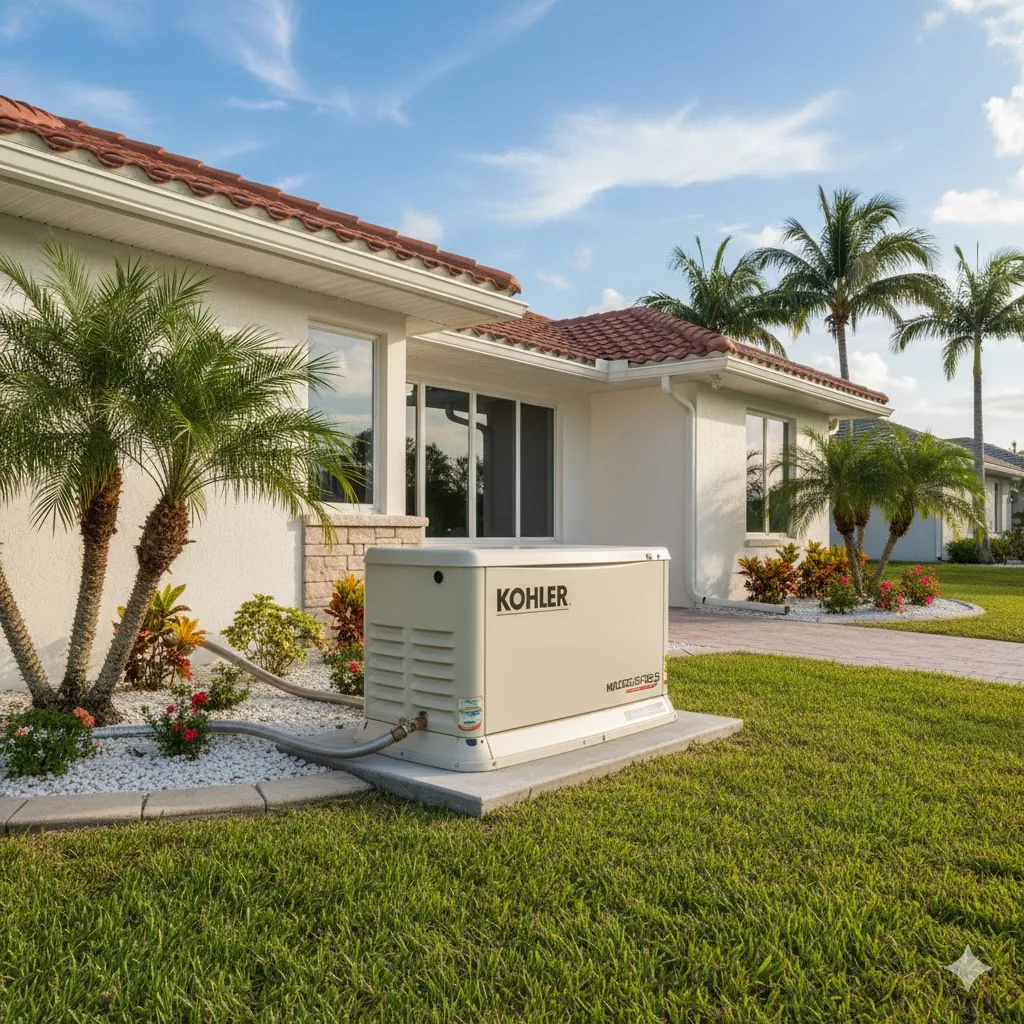
Kohler | Coastal and premium homes | Quiet operation, corrosion-resistant build |
Cummins | Large homes or commercial use | Commercial-grade reliability, self-diagnostics |
Tradewinds | Florida-specific performance | Designed for humidity and high-heat climates |
Each brand offers models in the 10-30 kW range suitable for most Florida homes. Dealer proximity and warranty support should weigh heavily in your choice to ensure rapid storm-season service.
Local insight: In hurricane-prone Florida, choose a brand with nearby dealers for fast parts and service. GenStar offers full support across Orlando, Tampa, and the Gulf Coast.
Keeping your generator in top shape guarantees it will work when you need it most.
The best way to protect your investment is with a maintenance plan from a certified dealer. Most major brands offer 5–10 year warranties, extendable with certified installation and maintenance by authorized dealers like GenStar Generator Services.
Schedule your preventive generator maintenance with a GenStar certified technician to stay storm-ready year-round.
Backup power doesn’t have to break the bank. Many homeowners use:
Ask your installer about current rebates or 0 % financing offers to make your investment affordable.
A standby generator is more than emergency power, it’s peace of mind for Florida’s unpredictable weather. Choosing the right generator means balancing your home’s energy needs, complying with Florida’s strict codes, and partnering with expert local professionals who handle permits and installation seamlessly.
Start your backup power journey with a team you can trust.